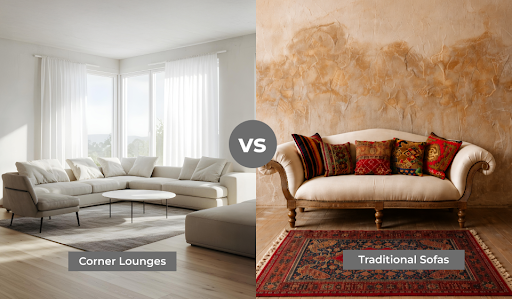
A corner lounge can make better use of an open corner and provide generous seating for family and guests. A traditional sofa offers more flexibility, particularly when furniture needs to be moved or rearranged.
So, which option is better for your living room? The answer depends on the space available, how the room is used and the type of layout that works best.
What Is a Corner Lounge?
A corner lounge is designed to fit into the corner of a room, usually forming an L-shaped configuration. It can combine a longer seating section with a shorter return, chaise or additional section.
This design is useful when seating needs to accommodate several people without placing multiple separate sofas around the room. It can also help define a seating area in an open-plan living space.
Corner lounges come in different sizes and configurations, so measuring the room before choosing one is important. The position of doors, windows, walkways and other furniture can affect whether a particular design works.
What Makes a Traditional Sofa Different?
A traditional sofa usually has a straightforward linear shape and can be positioned against a wall or placed further into the room. Depending on its size, it can seat two, three or more people.
One of its biggest advantages is flexibility. A traditional sofa can be paired with an armchair, ottoman or second sofa to create a seating arrangement that suits the room.
It can also be easier to move when the living room layout changes. This makes a traditional sofa worth considering for renters, smaller homes or anyone who likes to rearrange furniture from time to time.
Corner Lounges Make Better Use of Some Spaces
For rooms with an unused corner, a corner lounge can turn that area into useful seating rather than leaving it empty.
The L-shaped design can also create a clear boundary around the living area. This is particularly useful in open-plan homes where the lounge, dining and kitchen areas share one larger space.
Another benefit is seating capacity. Instead of adding several individual pieces, a single corner configuration can provide enough room for family movie nights, visitors or everyday relaxing.
However, size matters. A large corner lounge can make a smaller room feel crowded if there is not enough space around it.
Traditional Sofas Offer More Layout Flexibility
A traditional sofa is often the safer choice when flexibility is a priority.
It can sit against a wall, face a television, sit opposite another sofa or work alongside an armchair. If the room changes later, the sofa can usually be repositioned without having to rethink the entire seating arrangement.
This flexibility can be especially useful in compact living rooms. Rather than committing a large section of floor space to an L-shaped lounge, a traditional sofa can leave more room for side tables, floor lamps, storage or other furniture.
Corner Lounge or Traditional Sofa: Which Should You Choose?
A corner lounge may be the better choice if:
- The living room has a suitable corner available.
- Several people need to sit together regularly.
- A defined lounge area is needed in an open-plan space.
- Stretching out is an important part of how the room is used.
A traditional sofa may be a better fit if:
- The room is compact or has an unusual layout.
- Furniture needs to be rearranged regularly.
- Additional seating such as an armchair is preferred.
- More open floor space is needed around the sofa.
There is no universal winner. The right choice comes down to the room and the people using it.
Final Thoughts
Corner lounges and traditional sofas solve different seating needs. A corner lounge can maximise seating in the right layout, while a traditional sofa gives greater freedom to change the arrangement over time.
Before choosing, consider the room dimensions, walking space, number of people using the lounge and how the furniture will be used each day. A sofa should work with the room rather than simply fill the largest available space.
Frequently Asked Questions
Are corner lounges suitable for small living rooms?
They can be, provided the dimensions suit the room. A compact corner lounge may make good use of an awkward corner, but a large design can restrict movement. Always measure the available floor area first.
Do corner lounges provide more seating than traditional sofas?
Generally, yes. Their L-shaped design can accommodate more people within one seating arrangement. The exact capacity depends on the size and configuration.
Can a traditional sofa work in an open-plan living room?
Yes. A traditional sofa can be positioned to help separate the living area from the dining or kitchen space. Pairing it with an armchair or console table can further define the zone.
Which is easier to move, a corner lounge or traditional sofa?
A traditional sofa is generally easier to move because it is a single, linear piece. Corner lounges can have multiple sections, which may make moving and rearranging more involved.
Should a sofa go against the wall?
Not necessarily. While placing a sofa against the wall can save floor space, larger living rooms may benefit from positioning the sofa further into the room to create a defined seating area.