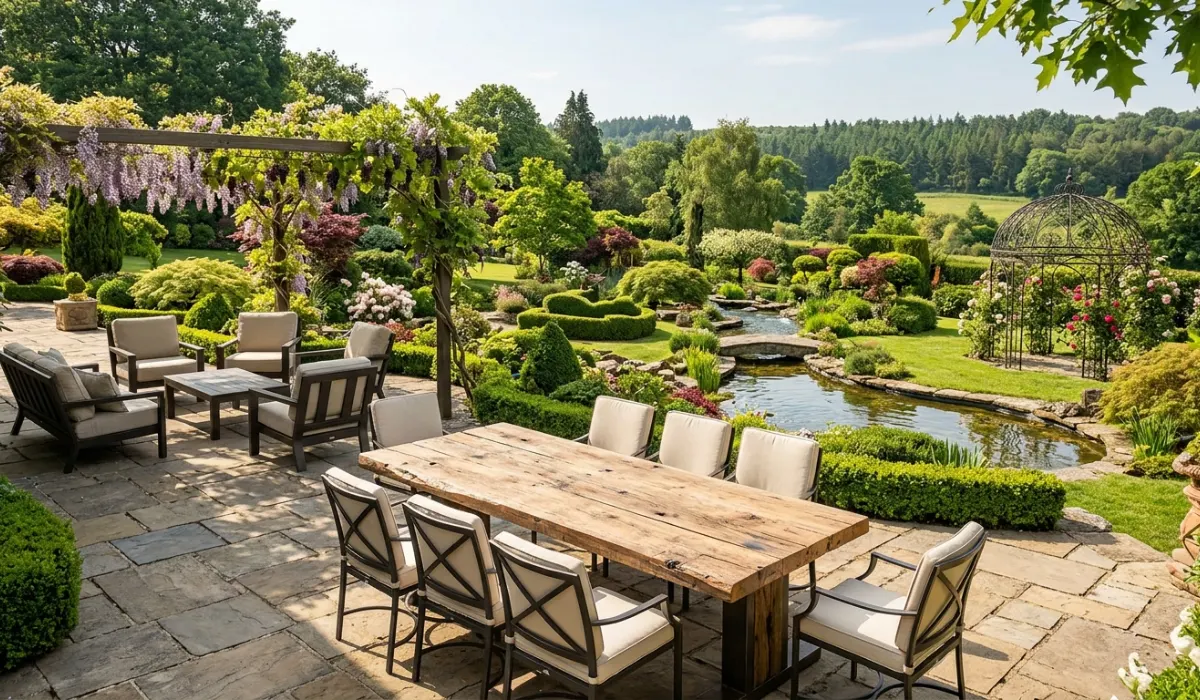
A successful home garden is not created simply by buying attractive plants and placing decorations around them. The best outdoor spaces begin with understanding the site, deciding how the garden will be used, and then combining plants, pathways, seating, lighting, and decorative features in a practical way. These decoradhouse garden tips by decoratoradvice focus on that complete process so homeowners can create a garden that is attractive, comfortable, and manageable over time.
Whether you have a spacious backyard, a compact patio, a balcony, or a narrow side garden, the same principle applies: work with the space rather than against it. A beautiful garden should suit its sunlight, soil, climate, available water, architecture, and the amount of time you can realistically spend maintaining it.
What Makes a Well-Designed decoradhouse garden tips by decoratoradvice?
decoradhouse garden tips by decoratoradvice designed is a combination of appearance and function. A garden may contain beautiful flowers and expensive furniture, but if the pathway is difficult to use, plants are overcrowded, drainage is poor, or maintenance is excessive, the space will quickly become frustrating.
A well-planned garden should provide:
- Comfortable movement between different areas
- Appropriate space for plants to mature
- A logical location for seating
- Good drainage and practical watering
- A clear visual focal point
- Enough open space to prevent clutter
- Materials that complement the house
- A maintenance routine that fits the homeowner
The goal of decoradhouse garden tips by decoratoradvice is therefore not to add as many features as possible. It is to make each feature serve a useful purpose.
Assess Your Garden Before Buying Plants for decoradhouse garden tips by decoratoradvice
One of the biggest gardening mistakes is shopping before studying the site. Spend several days observing the outdoor area before making major purchases.
Notice where direct sunlight appears in the morning and afternoon. Look for places that remain shaded, areas where water collects after rain, dry locations beneath roof overhangs, and sections exposed to strong wind.
Also consider:
- Existing trees and their roots
- Walls and fences
- Doors and gates
- Outdoor taps and irrigation connections
- Utility access
- Existing paths
- Views you want to highlight
- Areas that need privacy
- Routes used by children or pets
This simple observation stage can prevent expensive mistakes later.
Understand Sunlight Patterns for decoradhouse garden tips by decoratoradvice
Plants should be selected according to actual light conditions rather than appearance alone. A full-sun plant placed in deep shade may become weak, while a shade-tolerant plant exposed to intense afternoon heat may struggle.
Because sunlight changes with seasons, do not assume that one observation tells the whole story. Tall trees and nearby buildings can also change the amount of light reaching a garden.
Define the Purpose of Each Garden Area is decoradhouse garden tips by decoratoradvice
Before creating a layout, decide what you want the garden to do.
A single backyard might contain several purposes:
- A quiet seating area
- A dining space
- A children’s activity area
- A vegetable or herb garden
- A privacy screen
- A flower display
- A pathway
- A storage area
Dividing the garden into functional zones makes the space easier to organize. It also prevents furniture, plants, and decorations from competing for the same area.
For example, a seating zone may need shade and attractive planting, while a vegetable area may need maximum sunlight and easy access to water.
Choose a Garden Style That Fits Your Home to decoradhouse garden tips by decoratoradvice
A garden becomes more visually successful when its design relates to the house.
Modern Garden
Modern gardens often work well with simple planting groups, clean pathways, restrained colors, geometric containers, and uncluttered furniture.
Natural or Cottage Garden
A more relaxed garden can use informal planting, varied textures, flowering plants, natural materials, and softer pathways.
Low-Maintenance Garden
A practical low-maintenance design can emphasize suitable long-lived plants, efficient irrigation, durable hardscape, mulch, and fewer areas that require frequent trimming.
Edible and Ornamental Garden
Herbs, vegetables, fruiting plants, flowers, and ornamental shrubs can be combined when their light, soil, water, and maintenance requirements are compatible.
The important point is not choosing the trendiest style. It is choosing a style that fits your property and lifestyle.
Use Plant Layers to Create Depth wih decoradhouse garden tips by decoratoradvice
Plant layering is one of the most effective decoradhouse garden tips by decoratoradvice for creating visual depth.
Instead of placing every plant at the same height, combine different levels:
Upper layer: trees or tall structural plants
Middle layer: shrubs and medium-height plants
Lower layer: flowers, herbs, groundcovers, and border plants
Layering can make a garden feel fuller without filling every square foot.
However, always check the mature width and height of plants. A small nursery plant can eventually become large enough to block windows, paths, neighboring plants, or utility access.
Select Plants According to Conditions
Plant selection should begin with the site, not the plant’s appearance.
Before purchasing, check:
- Sunlight requirements
- Local climate suitability
- Mature height and width
- Soil preferences
- Drainage requirements
- Water needs
- Wind and heat exposure
- Growth rate
- Seasonal appearance
- Maintenance requirements
Plants with similar water requirements can often be grouped together. This approach makes irrigation easier and reduces the risk of constantly overwatering one plant while underwatering another.
Consider Mature Size
Always look beyond the size of the plant in the nursery container.
Ask:
- How wide will it become?
- How tall will it grow?
- Will roots interfere with paths or structures?
- Will branches block windows?
- How much pruning will it eventually require?
Planning for mature size is one of the easiest ways to avoid an overcrowded garden several years later.
Improve Soil and Drainage Before Planting
Beautiful decoration cannot compensate for poor growing conditions.
If plants repeatedly struggle, investigate the soil before adding more fertilizer. Soil testing can provide useful information about pH and nutrient conditions, while simple observation can reveal compaction and drainage problems.
Avoid applying large amounts of lime, fertilizer, or other amendments without understanding what the soil actually needs.
Solve Drainage Problems Early
Standing water can damage roots and create unhealthy growing conditions. Observe where water remains after rainfall.
Possible solutions depend on the cause and may include:
- Improving soil structure
- Redirecting surface water
- Creating appropriate planting beds
- Using suitable drainage systems
- Selecting plants tolerant of wetter conditions
Do not treat every drainage problem as a plant-selection problem. Sometimes the underlying water movement needs to be addressed first.
Design Pathways for Movement and Maintenance
Garden paths are both practical and decorative.
A pathway should provide a comfortable route between frequently used areas while allowing enough access for gardening work. Avoid creating narrow passages that become difficult to use once plants mature.
Materials can include:
- Stone
- Brick
- Gravel
- Pavers
- Other suitable outdoor surfaces
Straight paths can create a formal appearance, while gentle curves can produce a softer garden experience. The right choice depends on the architecture and overall garden style.
Use Negative Space Instead of Filling Everything
One of the most valuable principles in garden decoration is that empty space can improve the design.
If every corner contains plants, furniture, pots, ornaments, and lighting, the garden can feel smaller and chaotic.
Open areas provide visual breathing room. They also make mowing, cleaning, pruning, watering, and movement easier.
For small gardens, negative space can be especially powerful because it prevents visual overcrowding.
Make Decorative Elements Do a Job
A garden decoration becomes more useful when it provides both beauty and function.
Consider these combinations:
- Storage bench: seating + storage
- Trellis: plant support + privacy
- Planter: greenery + boundary
- Pathway: circulation + visual structure
- Lighting: safety + atmosphere
- Pergola: shade + architectural structure
- Water feature: focal point + sound
- Raised planter: planting + accessibility
This approach keeps the garden attractive without filling it with unnecessary objects.
Create One Strong Focal Point
A garden usually benefits from one primary visual anchor.
It could be:
- A distinctive tree
- A large planter
- A fountain
- A sculpture
- A seating area
- A flowering plant group
- An architectural feature
The focal point should be visible from an important viewpoint, such as the entrance, patio, living-room window, or main pathway.
Avoid creating several equally dominant features. Repetition and supporting elements can guide the eye toward the main feature without competing with it.
Use Color, Texture, and Repetition Carefully
Color is only one part of garden design. Texture, shape, material, and repetition also influence how a garden feels.
A simple color palette can create a calm appearance, while carefully placed contrasting colors can draw attention to specific areas.
Repeated materials can also create visual unity. For example, a similar stone could appear in the pathway, planter edging, and seating area.
Texture adds another layer. Smooth paving beside fine grasses produces a different effect from rough stone beside broad-leaved plants.
Improve Small Gardens With Vertical Space
Small outdoor areas often benefit from using walls and vertical structures.
Useful options include:
- Trellises
- Wall planters
- Hanging containers
- Climbing plants
- Vertical herb systems
- Narrow plant shelves
However, vertical gardening still requires planning. Check the strength of the supporting structure, watering access, plant weight, sunlight, and maintenance requirements.
Containers also dry out more quickly than many in-ground beds, particularly in hot weather, so they need appropriate monitoring.
Plan Garden Lighting in Layers
Garden lighting should not mean making every part of the property equally bright.
Instead, combine different purposes:
Path lighting improves visibility along walking routes.
Accent lighting highlights trees, architectural features, sculptures, or planting.
Seating-area lighting makes outdoor living spaces more practical after sunset.
Entry lighting helps people approach doors, gates, and steps safely.
Solar lighting can be convenient where electrical installation is difficult, but its performance depends on sunlight, battery capacity, fixture quality, and placement.
Avoid excessive glare. Lighting should enhance the garden rather than overwhelm it.
Create a Smarter Garden Watering System
Watering is easier when plants are grouped according to their needs.
A garden may have separate areas for:
- Higher-water plants
- Moderate-water planting
- Drought-tolerant plants
- Containers
- Vegetables or herbs
This is known as hydrozoning and can make irrigation more efficient.
Drip or microirrigation can be useful for many beds and containers because water can be delivered close to the root zone. Sprinklers may be more appropriate for some larger lawn or planting areas.
There is no single watering schedule that works for every garden. Check soil moisture, weather, plant type, container size, and seasonal conditions before watering.
Use Mulch Correctly
Mulch can support easier garden maintenance by reducing exposed soil, moderating moisture loss, and helping suppress some weeds.
Organic materials such as suitable composted material, leaves, or wood-based mulch can be useful depending on the garden.
Do not pile mulch tightly against trunks or plant stems. Excessive mulch can create moisture-related problems around plant bases.
Make the Garden Friendly to Wildlife
A garden can become more interesting when it provides useful habitat for birds, butterflies, bees, and other beneficial organisms.
Consider suitable flowering plants, locally adapted species, water sources where appropriate, and a mixture of plant structures.
Avoid assuming that every ornamental plant benefits local wildlife. Research plants for your region and avoid invasive species.
A wildlife-friendly garden can also add movement and seasonal interest without relying entirely on decorative objects.
Refresh Your Garden on a Realistic Budget
A garden makeover does not need to happen all at once.
A sensible priority order is:
- Safety and drainage problems
- Soil improvement where necessary
- Long-lived trees and plants
- Irrigation
- Paths and planting beds
- Smaller plants
- Furniture
- Decorative accessories
This order helps prevent spending heavily on furniture or ornaments while fundamental garden problems remain unresolved.
You can also save money by propagating suitable plants, dividing established perennials where appropriate, reusing sound containers, buying smaller plants, and improving one section at a time.
Build a Seasonal Maintenance Routine
A beautiful garden requires ongoing observation.
Spring
Check winter damage, prepare planting areas, inspect irrigation, and plan seasonal planting.
Summer
Monitor soil moisture, heat stress, pests, weeds, and container drying. Provide appropriate shade or watering where needed.
Autumn
Remove unhealthy plant material, manage fallen leaves appropriately, clean pathways, and prepare sensitive plants for colder conditions.
Winter
Protect plants where necessary, inspect structures, maintain tools, and use the quieter season to review the garden plan.
The exact timing depends on your climate and plant selection, so local conditions should always take priority over a generic calendar.
Troubleshoot Problems Before Adding More Plants
When a plant looks unhealthy, avoid immediately replacing it.
Ask:
Are the leaves yellowing?
Check watering, drainage, light, and possible nutrient issues.
Are leaves wilting?
Check soil moisture, root health, heat, wind, and container conditions.
Are there holes or spots?
Inspect closely for insects, disease symptoms, environmental damage, or physical injury.
Is growth weak?
Review light, root space, soil conditions, watering, and plant suitability.
This troubleshooting approach can save money and prevent the same problem from appearing repeatedly.
A Simple Before-You-Buy Garden Checklist
Before purchasing plants, furniture, containers, or decorative features, ask:
- What problem am I trying to solve?
- How much sunlight does this area receive?
- What happens to the area after heavy rain?
- How large will the plant or feature become?
- How much maintenance will it require?
- Does it match the home’s exterior?
- Can I water and maintain it easily?
- Will it obstruct a pathway, window, gate, or utility?
- Does it have a useful purpose?
- Can I test the idea temporarily before making it permanent?
That final question is particularly valuable. Use movable containers, temporary furniture placement, or simple layout markers to test an arrangement before committing to permanent construction.
Common Garden Decoration Mistakes to Avoid
Even attractive gardens can become difficult to manage because of a few planning mistakes.
Buying Plants Before Assessing the Site
A beautiful plant is not necessarily the right plant for your garden.
Ignoring Mature Dimensions
Plants that look perfectly spaced today may become overcrowded later.
Mixing Incompatible Water Needs
Grouping plants with very different moisture requirements can complicate irrigation.
Overdecorating
Too many ornaments, containers, colors, and furniture pieces can destroy visual balance.
Ignoring Maintenance Access
Every planting area should be accessible enough for watering, pruning, cleaning, and inspection.
Solving Cosmetic Problems Before Structural Ones
Drainage, unsafe paths, poor soil, and irrigation problems should usually be addressed before spending heavily on decorative items.
Final Thoughts on DecorAdHouse Garden Tips by DecoratorAdvice
The most effective decoradhouse garden tips by decoratoradvice are not about copying a particular garden or purchasing a long list of decorations. They are about understanding the space first and then making decisions that work together.
Start by observing sunlight, drainage, soil, climate, movement, and existing structures. Decide how you want to use the garden. Create functional zones, choose plants according to their real growing requirements, and plan for mature size. Then introduce pathways, seating, lighting, containers, water features, and other decorative elements according to the garden’s needs.
The strongest garden designs also leave room for change. Plants grow, lifestyles change, and maintenance requirements become clearer with experience. By improving one area at a time and reviewing what works, you can develop an outdoor space that remains attractive, useful, and manageable for years.
Frequently Asked Questions
What is the first step in planning a home garden?
Start by observing the site. Check sunlight, soil, drainage, wind, existing plants, access routes, and how you want to use the space before buying anything.
How can I make a small garden look larger?
Use clear pathways, vertical planting, appropriately scaled furniture, limited decorative elements, and intentional open space. Avoid filling every available surface.
How do I choose plants for my garden?
Consider sunlight, climate, soil, drainage, mature size, moisture requirements, growth rate, seasonal appearance, and maintenance needs before purchasing.
What makes a garden look more expensive?
Consistency usually matters more than price. Coordinated materials, healthy plants, clean edges, thoughtful lighting, a clear focal point, and limited clutter can create a polished appearance.
Is vertical gardening suitable for every small garden?
It can be useful in many compact spaces, but the wall or support must be suitable for the weight, and plants still need appropriate light, water, and maintenance.
How can I reduce garden maintenance?
Choose plants suited to your conditions, group plants by water needs, use appropriate mulch, simplify the layout, provide maintenance access, and avoid creating more planting areas than you can realistically manage.
Should I use drip irrigation or sprinklers?
It depends on the garden. Drip or microirrigation can work well for many beds and containers, while sprinklers may be more appropriate for certain larger areas. Plant type, soil, climate, and layout should guide the choice.
How often should garden plants be watered?
There is no universal schedule. Check soil moisture and consider rainfall, temperature, plant requirements, soil type, and container size. Watering should respond to actual conditions rather than a fixed calendar.
Can garden decoration improve the value and appearance of a home?
Thoughtful landscaping and outdoor design can improve a property’s appearance and usability. The greatest benefit comes from creating a well-maintained space that fits the home’s architecture and everyday use.
How can I improve my garden without spending a lot?
Start by cleaning and reorganizing the existing space. Correct major drainage or safety problems, reuse suitable materials, propagate appropriate plants, improve one section at a time, and prioritize long-lasting improvements over unnecessary decorations.