You can nail the exterior of a modern farmhouse with right siding, right windows, right proportions and still have it look slightly off if the landscaping doesn’t match. Most articles on this just hand you a plant list and call it done. That’s not really the issue, though. The real question is why some landscaping choices reinforce the architecture and others quietly work against it.
Why the Landscaping Has to Match the House’s Attitude
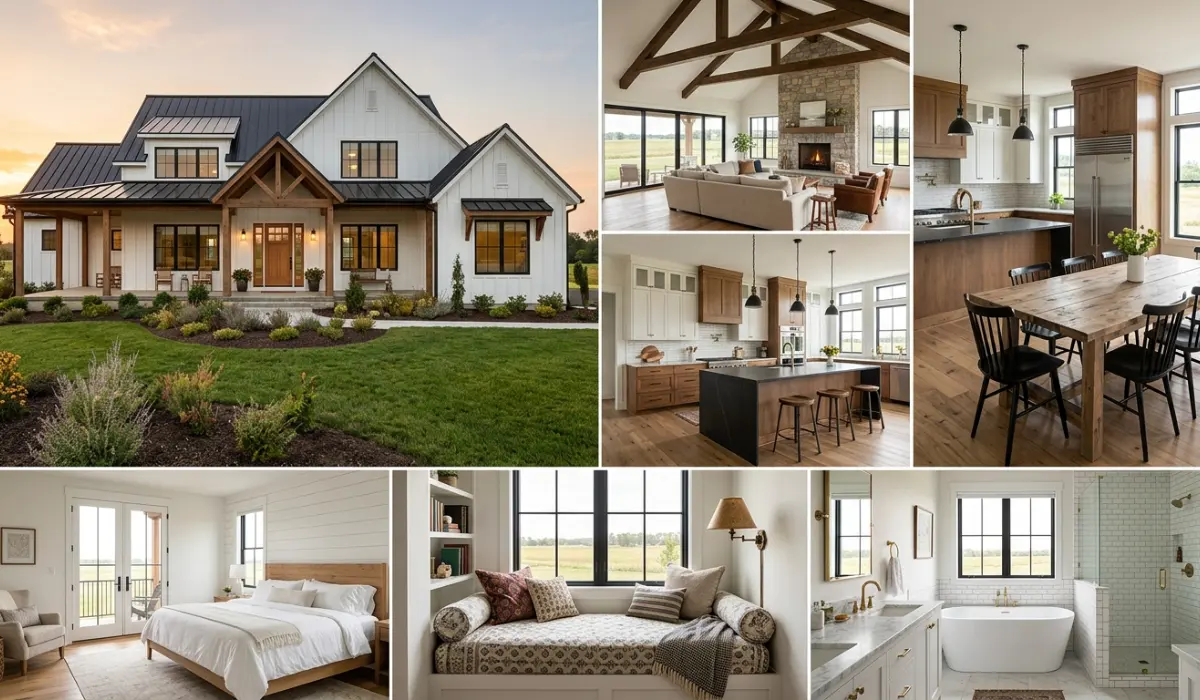
Modern farmhouse architecture is all about clean lines and restraint. Plant something lush and English-garden-style in front of it, and it starts to clash. Go too stark and minimal, on the other hand, and you lose the warmth the style is actually going for. The sweet spot is somewhere in between structured, but not fussy about it.
Repeat, Don’t Diversify
Here’s a pattern worth noticing: landscaping that repeats a small handful of plant types in clusters tends to look more deliberate than a yard packed with a dozen different varieties. It mirrors the same restraint you see in the house itself: fewer materials, used consistently, instead of a little bit of everything.
The Front Yard
What Tends to Work
- Symmetrical plantings framing either side of the porch
- Gravel or stone paths leading up to the door
- Simple hedging boxwood, hydrangeas along the walkway
- Black or bronze lighting fixtures that echo the window frames
H3: Plant Choices by Climate
| Plant Type | Best Climate | Maintenance |
| Boxwood hedging | Temperate, cooler regions | Low–Moderate |
| Hydrangeas | Humid, moderate sun | Moderate |
| Ornamental grasses | Hot, dry regions | Low |
| Lavender borders | Dry, sunny climates | Low |
Hardscaping
Gravel, natural stone, simple poured concrete that’s basically the material vocabulary that fits a modern farmhouse yard. Fancy paver patterns tend to look out of place next to architecture that’s this restrained.
Driveways and Walkways
Gravel driveways are popular for a reason: cheap, rustic without trying too hard, though you’ll need to regrade them occasionally. Poured concrete with a simple joint pattern is the more contemporary option, and it still fits the look just fine.
Backyard Spaces
Covered porches spilling out from the main living area, usually under a simple pergola rather than anything elaborate that’s the backyard formula for this style. Nothing too ornate.
Fire Pits and Seating
Simple stone or metal fire pits, paired with wood or metal furniture in neutral tones, read as intentional. Load the patio up with heavily upholstered or ornate furniture and it starts fighting the house’s whole vibe.
Fences
Board-on-board wood, or simple black metal both echo materials already on the house itself. That’s really the logic here: don’t introduce a totally new material language in the yard that has nothing to do with the siding or windows.
Climate Actually Changes the Right Answer
Something most landscaping guides skip entirely: plant choice needs to account for how much water your region actually has, not just what looks good in photos. If you’re somewhere dry, lean toward drought-tolerant grasses and lavender instead of hydrangeas, no matter how nice hydrangeas photograph.
Cold Climates
Evergreens boxwood, certain conifers help hold the yard’s symmetry together through winter, since a lot of the popular flowering plants just go dormant for months at a time.
Weighing the Approach
| Pros | Cons |
| Structured planting reinforces the house’s symmetry | Needs more consistent trimming |
| Gravel and stone hardscaping is budget-friendly | Occasional regrading or weed upkeep |
| Neutral outdoor furniture ages well visually | Less room for bold color if that’s your preference |
| Drought-tolerant plants cut water costs | Fewer flowering options in dry climates |
Mistakes People Make
- Going for variety instead of repetition and structure
- Ignoring how much water is actually available in the region
- Mixing ornate hardscaping with architecture that’s meant to be minimal
- Picking fencing that has nothing to do with the house’s own materials
Questions People Ask
What plants actually work for this style?
Structured, repeated choices boxwood, hydrangeas, ornamental grasses picked based on your climate more than just how they look in someone else’s photos.
Should the yard be minimal or lush?
Somewhere in between. Structured and restrained, echoing the house’s symmetry, without tipping into either extreme.
What’s the best driveway material?
Gravel or simple poured concrete both fit the restrained material palette this style depends on.
Does the landscaping need to match the exterior paint colors?
Not directly, but keeping hardscaping and fencing materials consistent with what’s already on the house makes everything feel more unified.
Can drought-tolerant landscaping still fit this look?
Yes ornamental grasses and lavender both work well aesthetically while using a lot less water than typical flowering plants.
Bottom Line
Landscaping for a modern farmhouse works best when it echoes the same restraint you see in the architecture, instead of just following a generic plant list that has nothing to do with the house it’s sitting in front of. Pay attention to your actual climate and keep materials consistent with the house, and the whole property ends up feeling like one connected design not just a house with some plants stuck in front of it.