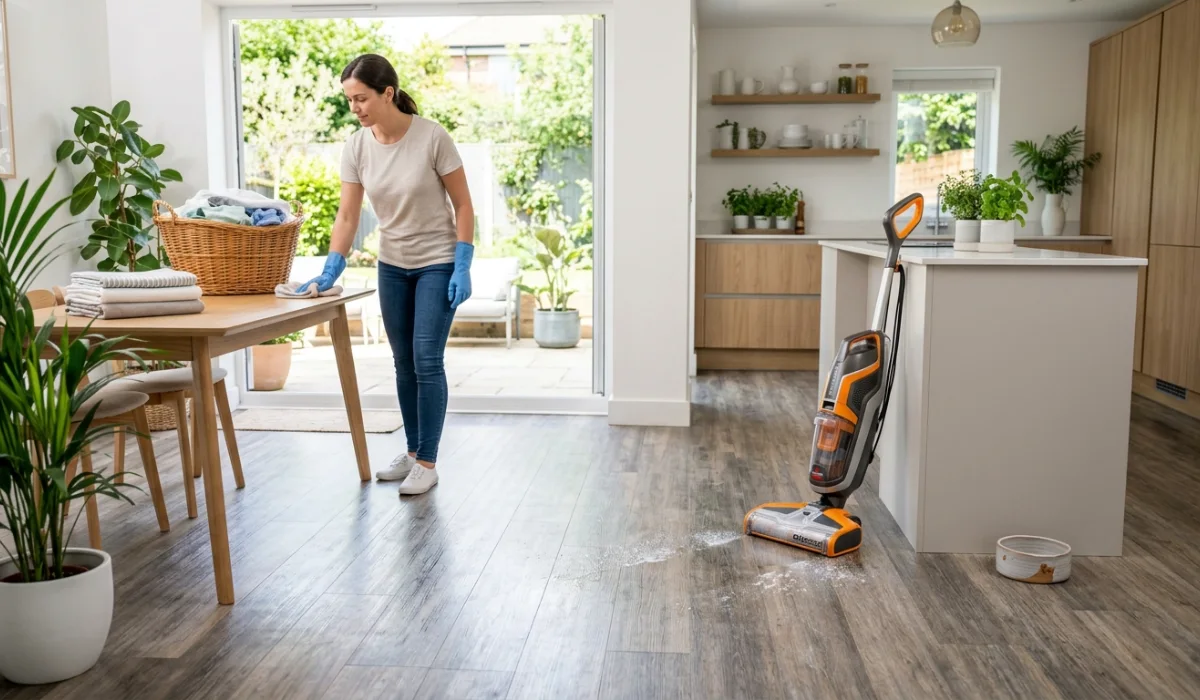
Every plank floor eventually hits a point where mopping stops making a visible difference. You run the mop over it, it dries, and the floor still looks tired. That’s usually the moment people start searching for how to deep clean plank flooring — not because they’ve been neglecting their floors, but because surface cleaning has quietly stopped being enough.
The team at Livpristhome has walked through this exact scenario with countless homeowners, and the fix rarely requires new flooring or expensive equipment. It requires a different cleaning approach — one that reaches what a mop physically can’t.
Why Plank Floors Look Dull Even When You Clean Regularly
Dirt and oils don’t just sit on the surface of plank flooring — they settle into seams between boards and into the texture patterns embossed on the surface. A mop glides over these spots without disturbing what’s inside them. Over time, that buildup shows up as a faint haze, a slightly gray tint in high-traffic areas, or seams that look darker than the rest of the board.
First, Identify What Kind of Plank Flooring You Have
This step gets skipped constantly, and it’s the reason so many people accidentally damage their floors while trying to clean them. The right method to deep clean plank flooring depends entirely on the material underneath the surface layer.
Vinyl Plank (LVP, SPC, WPC)
Water-resistant on the surface, but moisture can still work its way into the seams if it’s left standing too long.
Laminate Plank
Built with a wood-fiber core that swells when exposed to excess moisture, making it the least forgiving of the three when it comes to wet cleaning.
Solid or Engineered Hardwood Plank
Sensitive to both water and harsh chemical cleaners, which can strip the finish or raise the wood grain if the wrong product is used.
Tools That Actually Make a Difference
| Tool | Role in the Process |
|---|---|
| Soft-bristle vacuum or broom | Clears grit that would otherwise scratch the floor once wet |
| Microfiber mop | Cleans without leaving lint or fine scratches |
| pH-neutral cleaner | Won’t strip the finish or leave a dulling residue |
| Small detail brush | Gets into seams and textured grooves |
| Dry microfiber towels | Prevents standing moisture after cleaning |
The Deep Cleaning Process, Step by Step
1. Clear the room first. Furniture legs and rug edges trap more grime than open floor space, so moving everything out uncovers the areas that need the most attention.
2. Remove loose dirt before adding any liquid. A quick sweep or vacuum pass first prevents grit from turning into a scratching hazard once the floor is wet.
3. Mix a cleaner suited to your flooring. Vinyl and laminate generally do well with a mild soap-and-water mix. Hardwood needs a cleaner made specifically for wood finishes. Avoid relying on straight vinegar as your go-to solution — used occasionally and diluted, it’s fine, but regular use slowly wears down the protective coating.
4. Always mop with the grain. Working in the same direction as the planks keeps water from being pushed sideways into the seams, which is where most moisture-related damage starts.
5. Address the seams directly. This is the actual core of how to deep clean plank flooring, and it’s the step most cleaning routines skip entirely. Lightly dip a soft brush into your solution and run it along the seams and textured grooves where regular mopping never makes contact.
6. Handle stains and scuffs separately. A cloth dampened with isopropyl alcohol usually lifts scuffs on vinyl or laminate without harming the finish — just test an inconspicuous spot first. For hardwood, stay with a wood-safe cleaning product instead.
7. Dry everything thoroughly. A dry microfiber cloth or mop should follow immediately after cleaning, with extra attention paid to the seams. Of every step in this process, this is the one that protects the flooring’s long-term condition the most.
Comparing Your Cleaning Solution Options
| Cleaning Solution | Pros | Cons |
|---|---|---|
| Mild soap and water | Inexpensive and gentle on most finishes | Struggles with heavier grease buildup |
| Commercial pH-neutral cleaner | Reliable, formulated for specific materials | Adds to your regular cleaning budget |
| Diluted vinegar (used sparingly) | Cuts through light residue | Can dull the finish if overused |
| Isopropyl alcohol (spot treatment) | Strong on scuffs and sticky spots | Not meant for full-floor application |
Habits That Quietly Damage Plank Flooring
Steam cleaners are one of the biggest offenders — the combination of heat and moisture can work into seams and cause warping that doesn’t show up immediately. Stiff-bristle brushes and steel wool leave permanent scratch marks. Letting water sit on the surface, even for a short time, risks seeping beneath the boards. Vacuum attachments with rotating beater bars can also gouge softer plank surfaces.
How Often This Actually Needs to Happen
Most homes do well with a deep clean every 3 to 6 months. If you have pets, kids, or heavier daily traffic, shortening that to every 8–10 weeks keeps buildup from settling in. Rooms that see very little use can often go closer to twice a year.
Making the Results Last Longer
Small habits go a long way here. Felt pads under furniture legs prevent scuffing at pressure points. Entry mats cut down on the dirt tracked in from outside. Spills wiped up right away won’t have time to seep into seams. A light weekly sweep or vacuum keeps grit from accumulating again in the same spots.
Frequently Asked Questions
Why does my plank flooring look streaky after I clean it?
Streaking usually means either too much cleaner was used or the floor wasn’t dried thoroughly afterward. A follow-up pass with plain water and a dry cloth typically resolves it.
Are steam cleaners ever safe for plank floors?
Generally no. The heat and moisture can penetrate seams in vinyl, laminate, and engineered wood, leading to warping that may not be noticeable right away.
What’s the safest way to remove a sticky residue from plank floors?
A cloth lightly dampened with isopropyl alcohol usually removes sticky buildup on vinyl or laminate without damaging the surface.
Does hardwood plank flooring need a different deep cleaning method than vinyl?
Yes. Hardwood is more sensitive to both moisture and chemical cleaners, so a wood-specific product is necessary rather than an all-purpose one.
How do I know if I actually need a deep clean or just a regular mop?
If the floor still looks hazy, feels slightly tacky, or shows dark lines along the seams after a normal mop, it’s due for a proper deep clean.
Conclusion
Understanding how to deep clean plank flooring really comes down to recognizing that dirt hides in places a regular mop never reaches — the seams and textured grooves specifically. By matching your cleaning method to your flooring material, avoiding excess moisture, and following up with a simple maintenance routine, your plank floors can hold onto that just-cleaned look far longer. It’s the same process Livpristhome recommends to homeowners looking for results that actually last, not just a temporary shine.